 Back to Home
AI Building Experiences
Lead Product Designer · 2025 – Present
Airtable's bet on AI as the primary building interface created one central question: how do you make a powerful system approachable to people who don't know what to ask it? I have owned the design of that answer through every chapter: introducing Omni as Airtable's co-builder, evolving it from executor to collaborator, and now leading Canvas, where AI builds the whole app.
Canvas
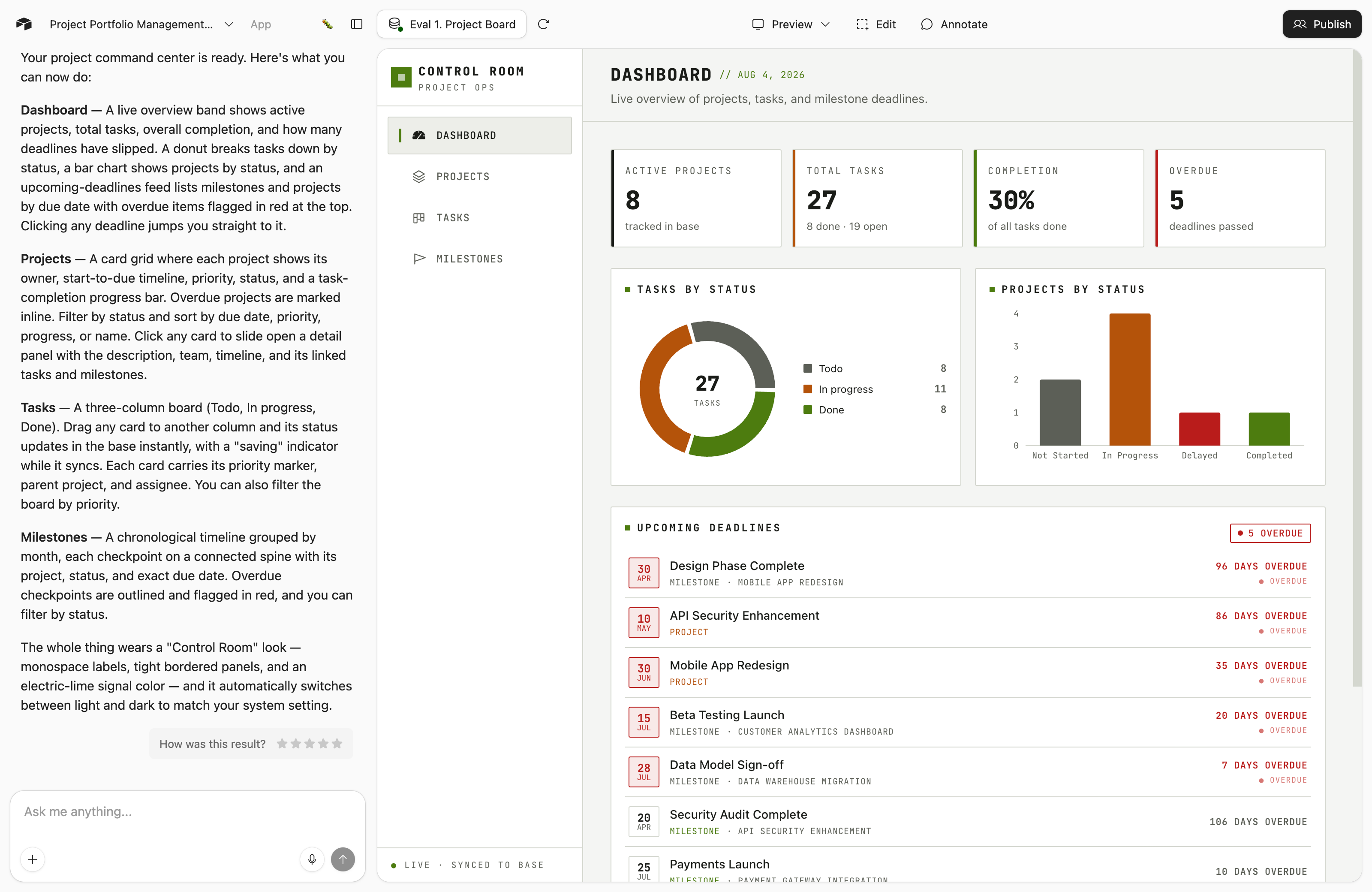
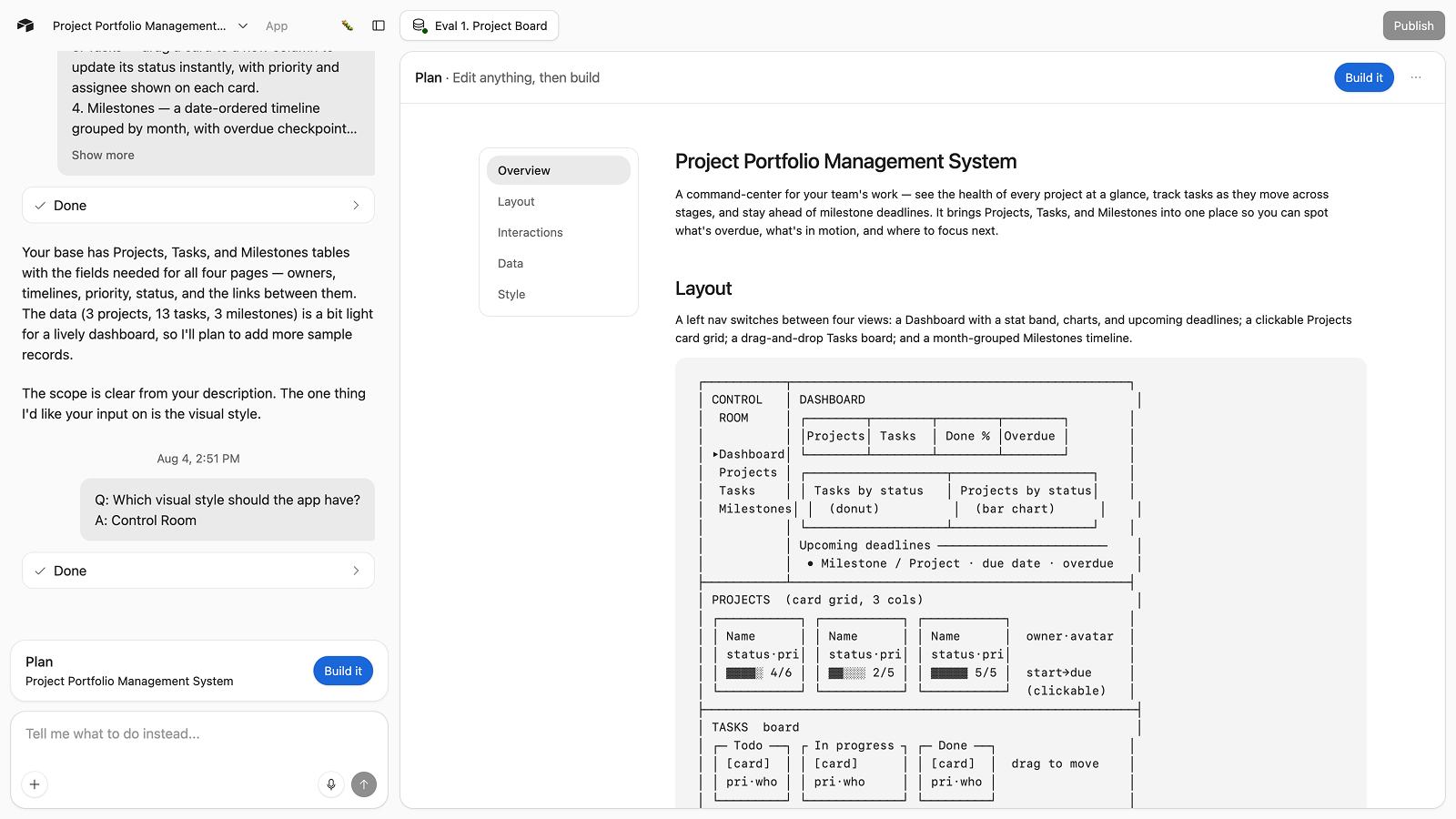
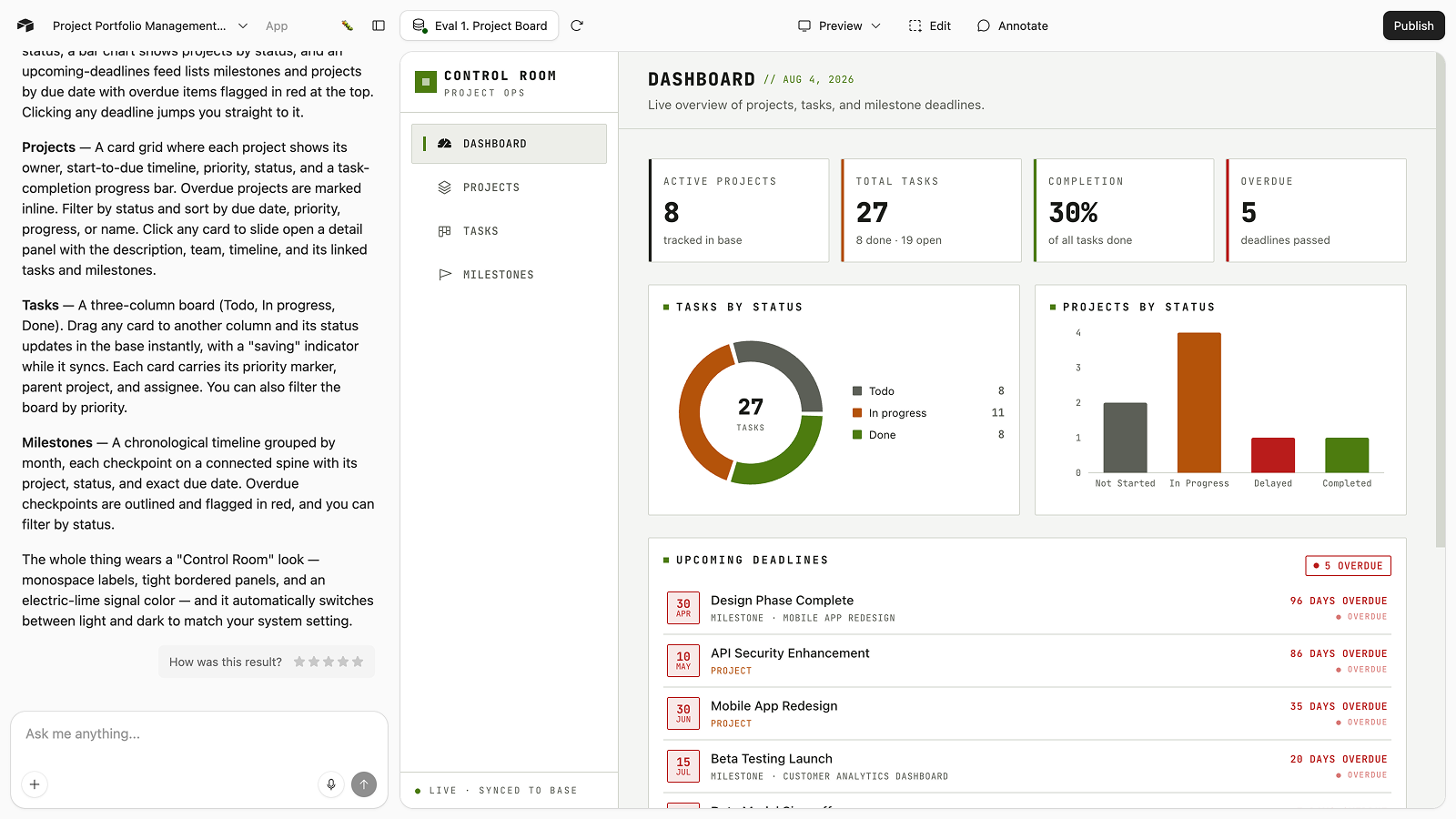
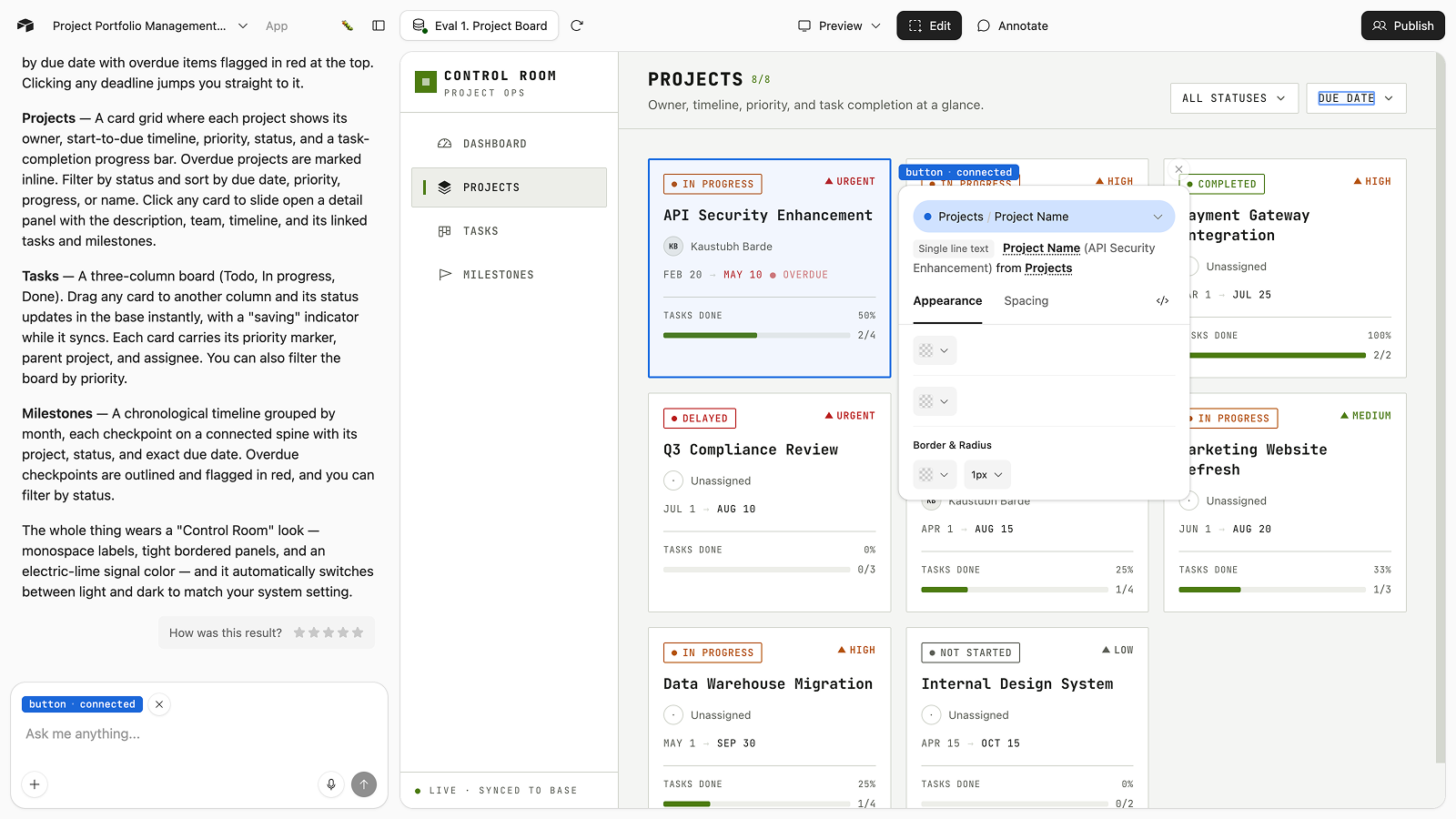
Feb 2026 – PresentCanvas is Airtable's biggest bet yet: AI that builds the whole app. It generates complete, custom interfaces from natural-language prompts, all grounded in your Airtable data. I lead end-to-end design, owning the agent chat experience (clarifying questions, plan review, thinking states) and driving design for marquee features like design system extraction, visual edits, data inspectability, and sharing.
It is also where I operate deepest in code: 89 production PRs and 14.6% of all commits, the top contributor alongside engineers. I designed the evaluation system that scores generated apps on visual quality and wrote LLM prompts in production code so generations never feel generic. Canvas launched to open beta with enterprise pilots at Nike, Apple, Netflix, and Airbnb.
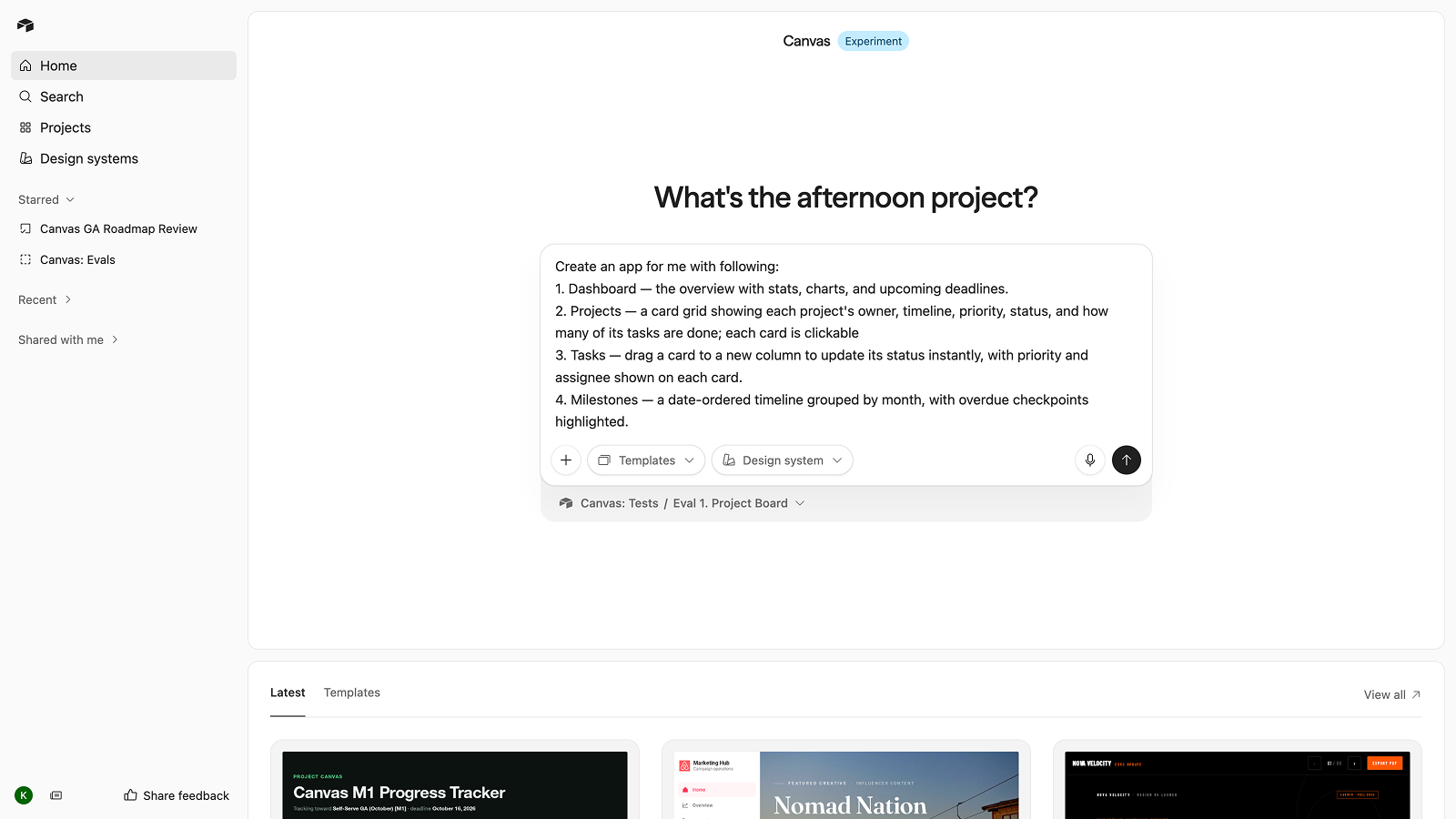
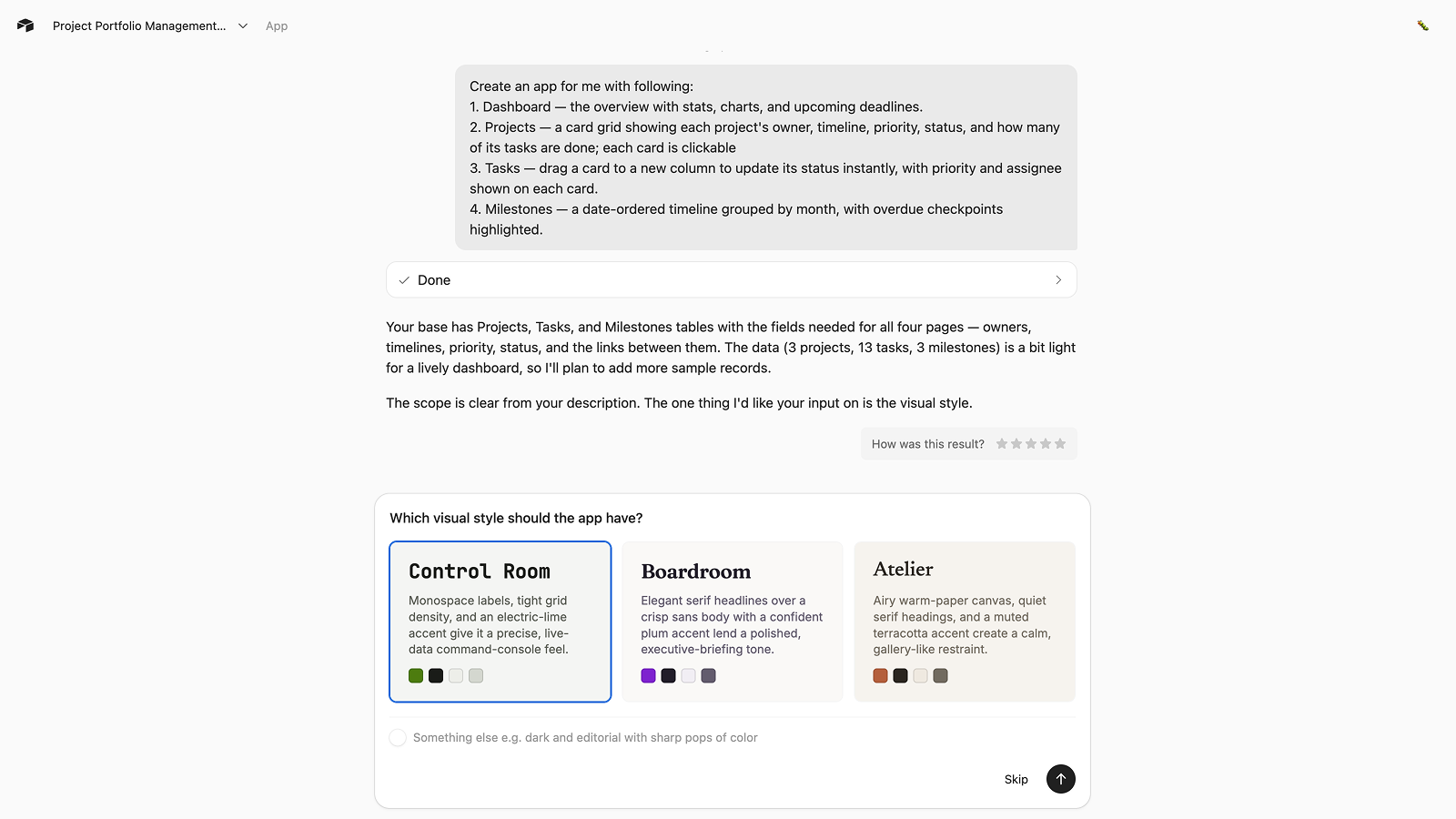
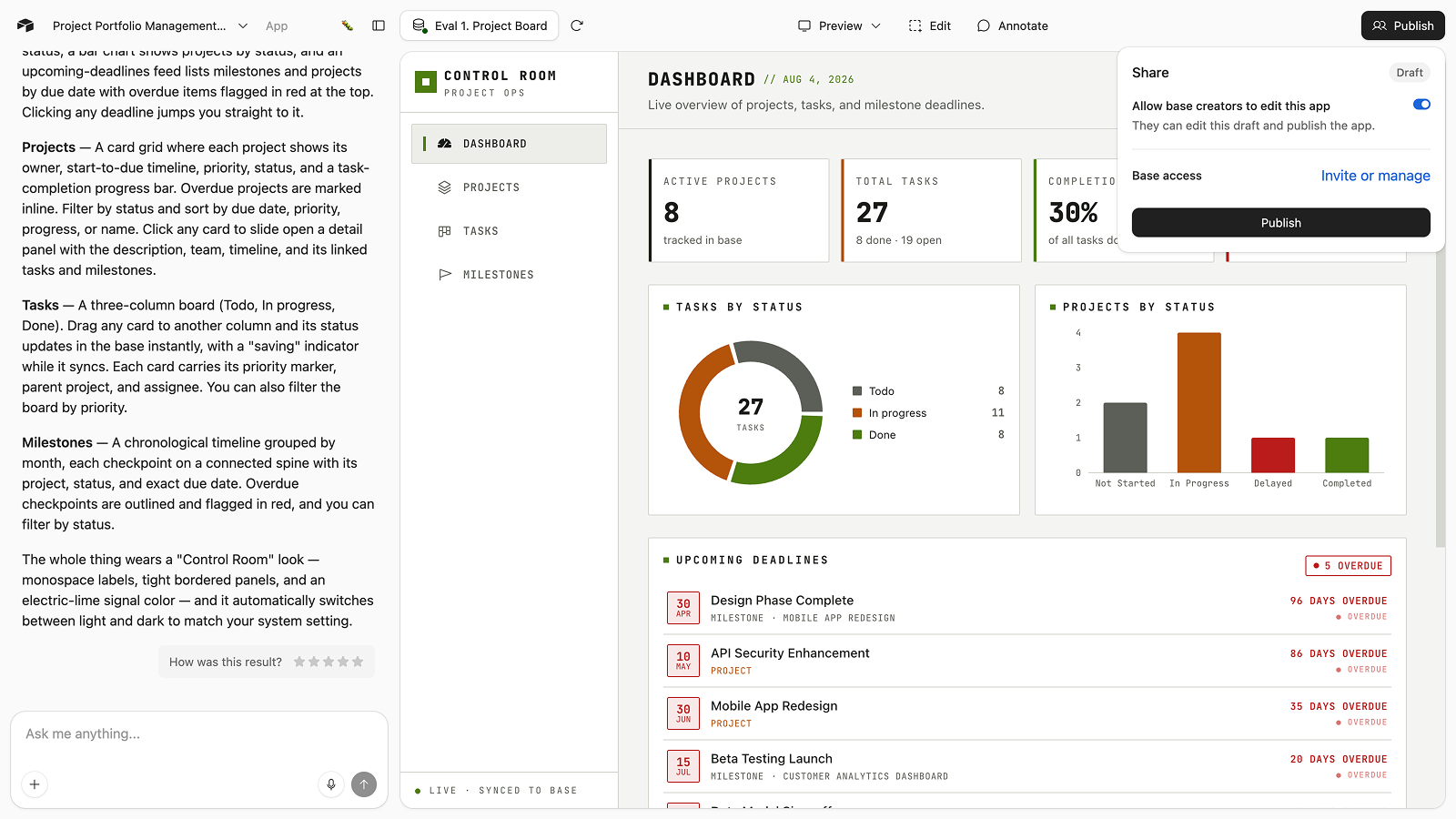
Describe the app you need in plain language
Consultative Building
Aug 2025 – Jan 2026Most AI builders execute on the first prompt: you ask, they generate, and you live with the guess. Consultative Building changed that contract. I developed a framework where Omni clarifies intent, proposes a build plan, and invites iteration before creating anything, evolving the interaction from execution to genuine co-creation. Getting users to trust a plan before seeing output required rethinking how AI communicates: what it asks, when it commits, and how it shows its thinking.
The plan-first model shipped with measurable lift and became the interaction backbone that Canvas builds on today.
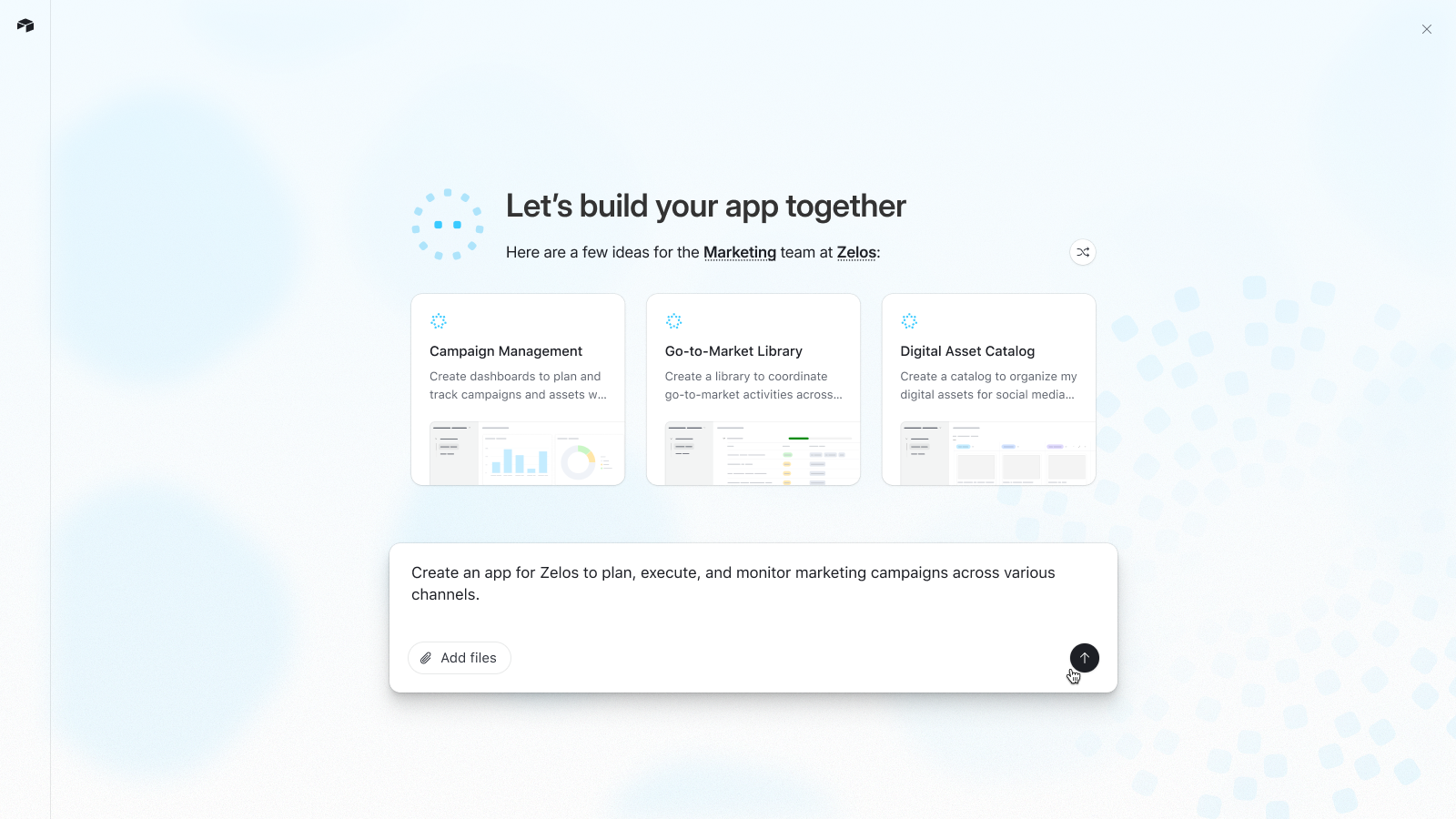
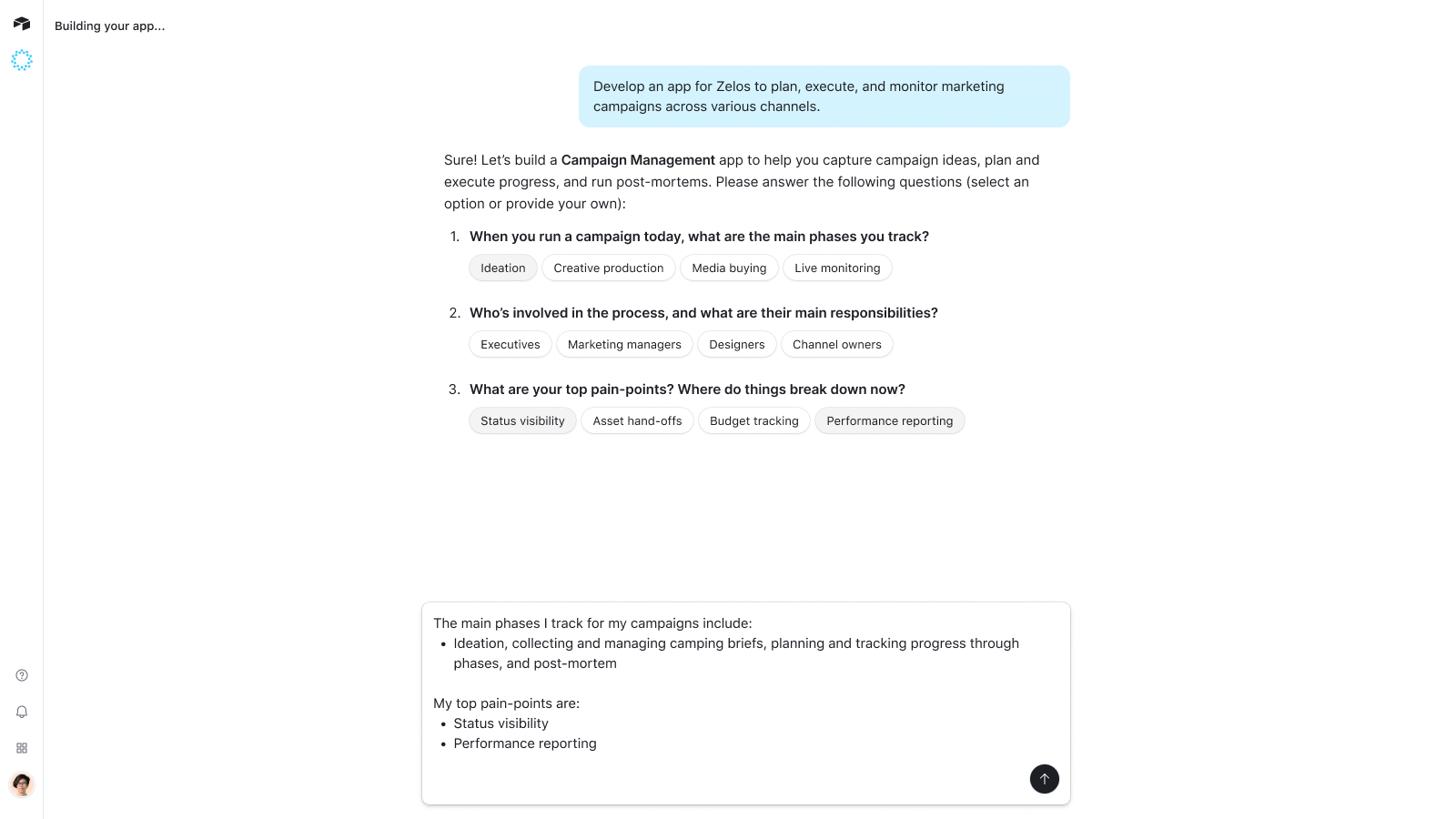
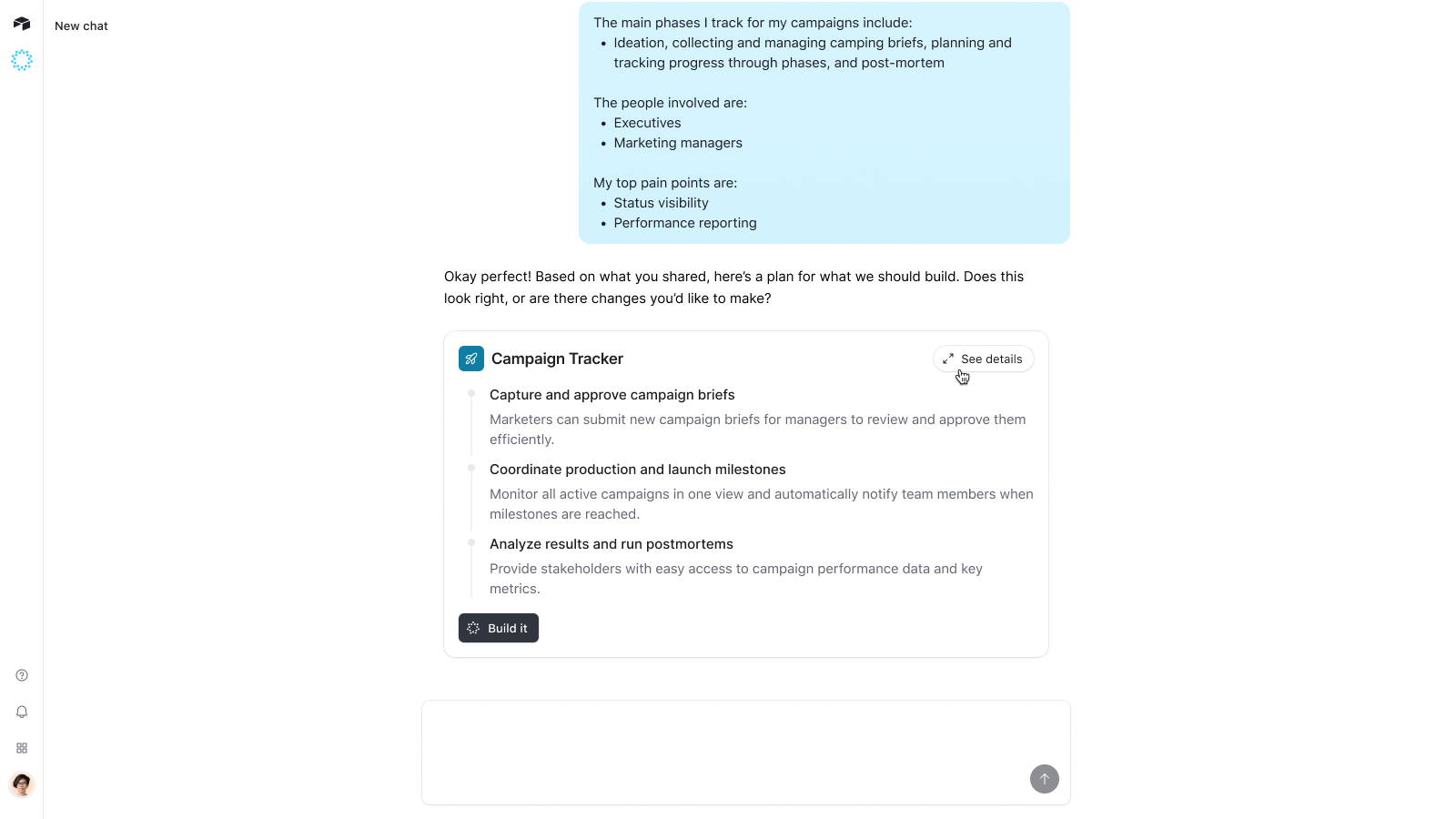
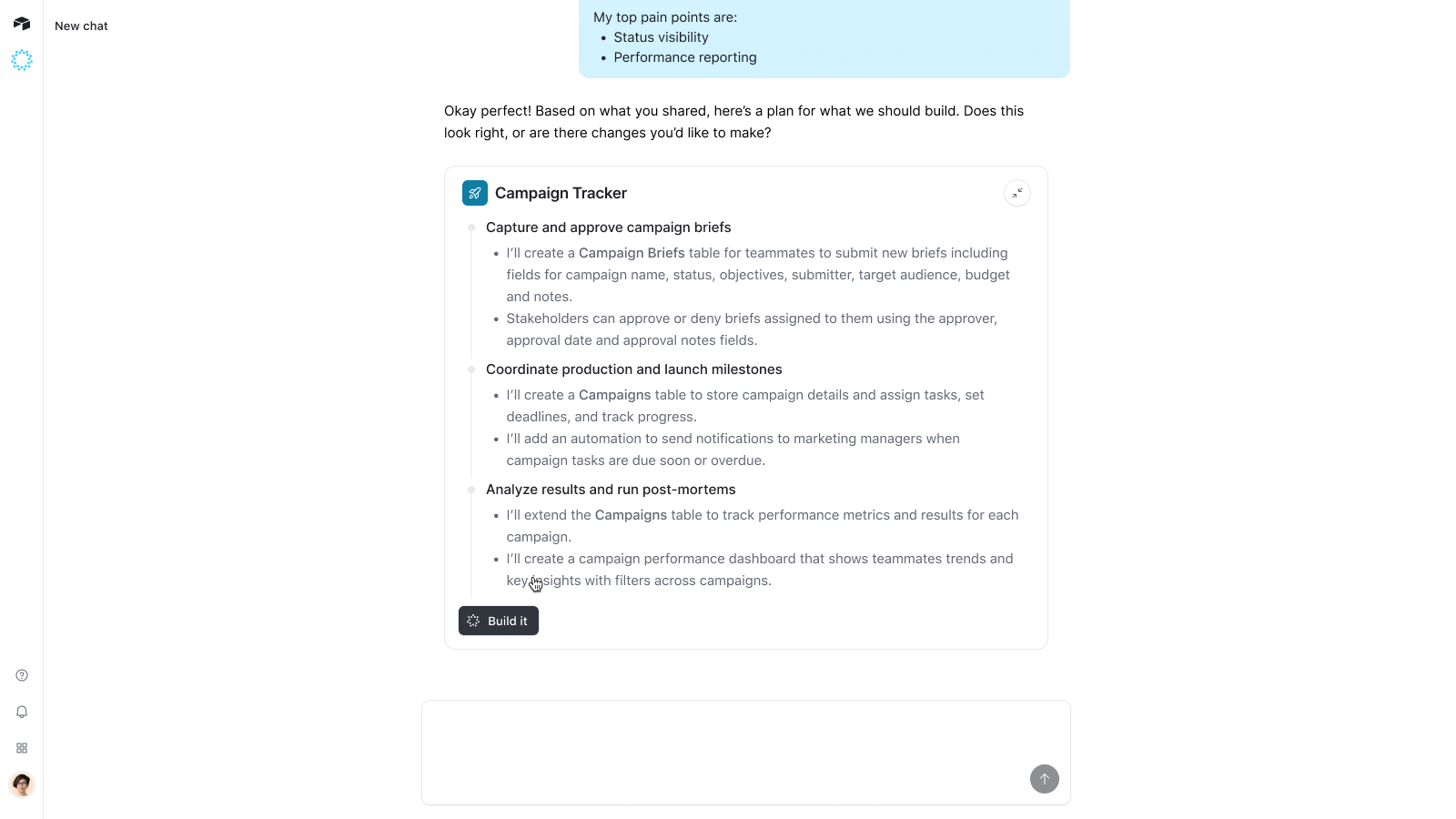
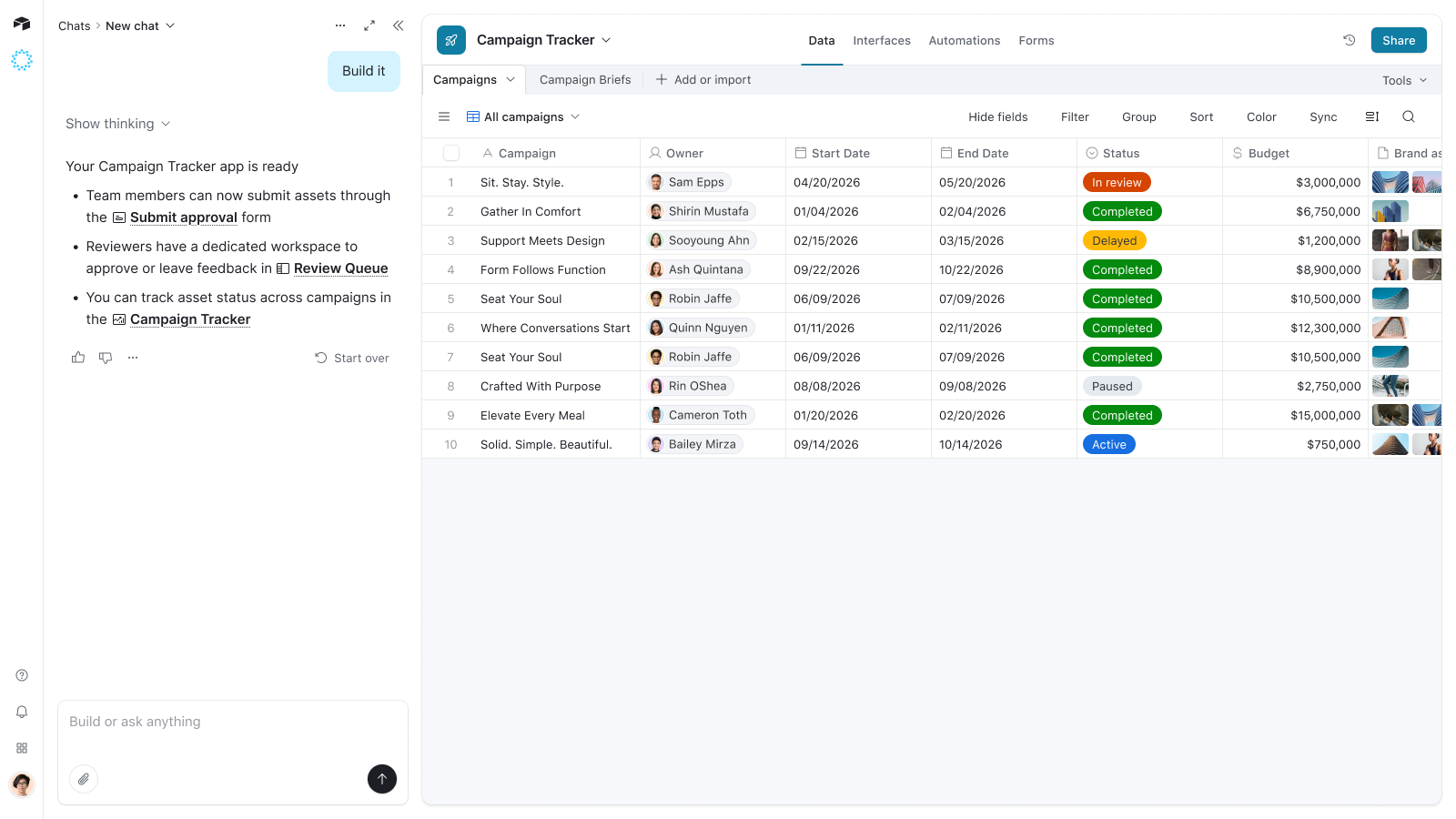
Describe what you want to build in natural language
AI-Native Launch
Feb 2025 – Aug 2025Airtable's legacy onboarding was built for a point-and-click world: static templates and guided steps with no room for personalization. For the AI-native launch, we replaced it entirely with a conversational model where Omni guides users from intent to app. I led the redesign from research through execution, solving three friction points: users didn't know what to ask, guidance was overwhelming, and templated flows couldn't match specific needs.
Beyond the flow, I defined Airtable's foundational AI interaction patterns (thinking states, suggestion flows, Omni's introduction), partnering directly with the CEO and Head of Design under deadline pressure. Those patterns remain the design standard across every AI surface at Airtable.
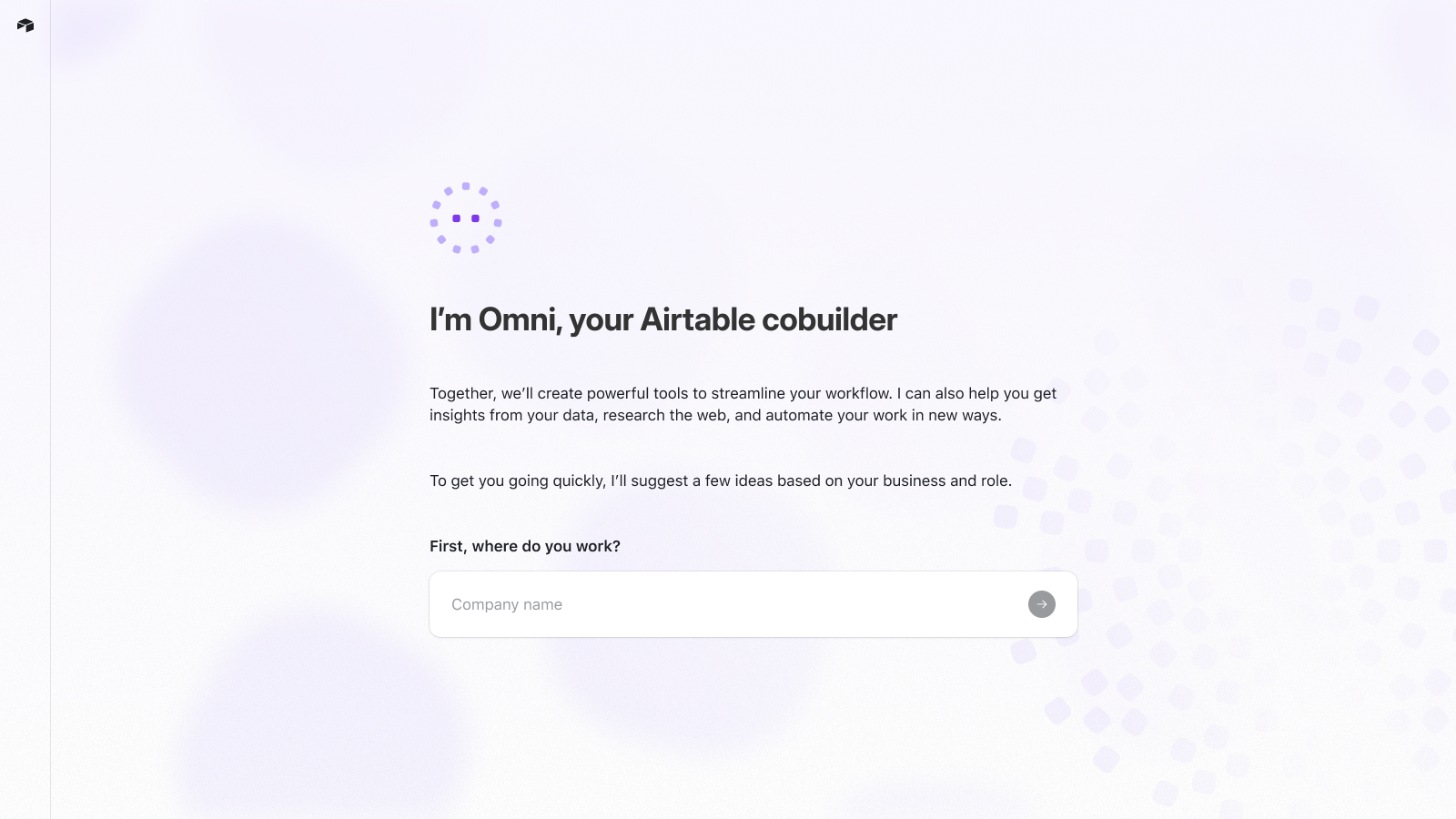
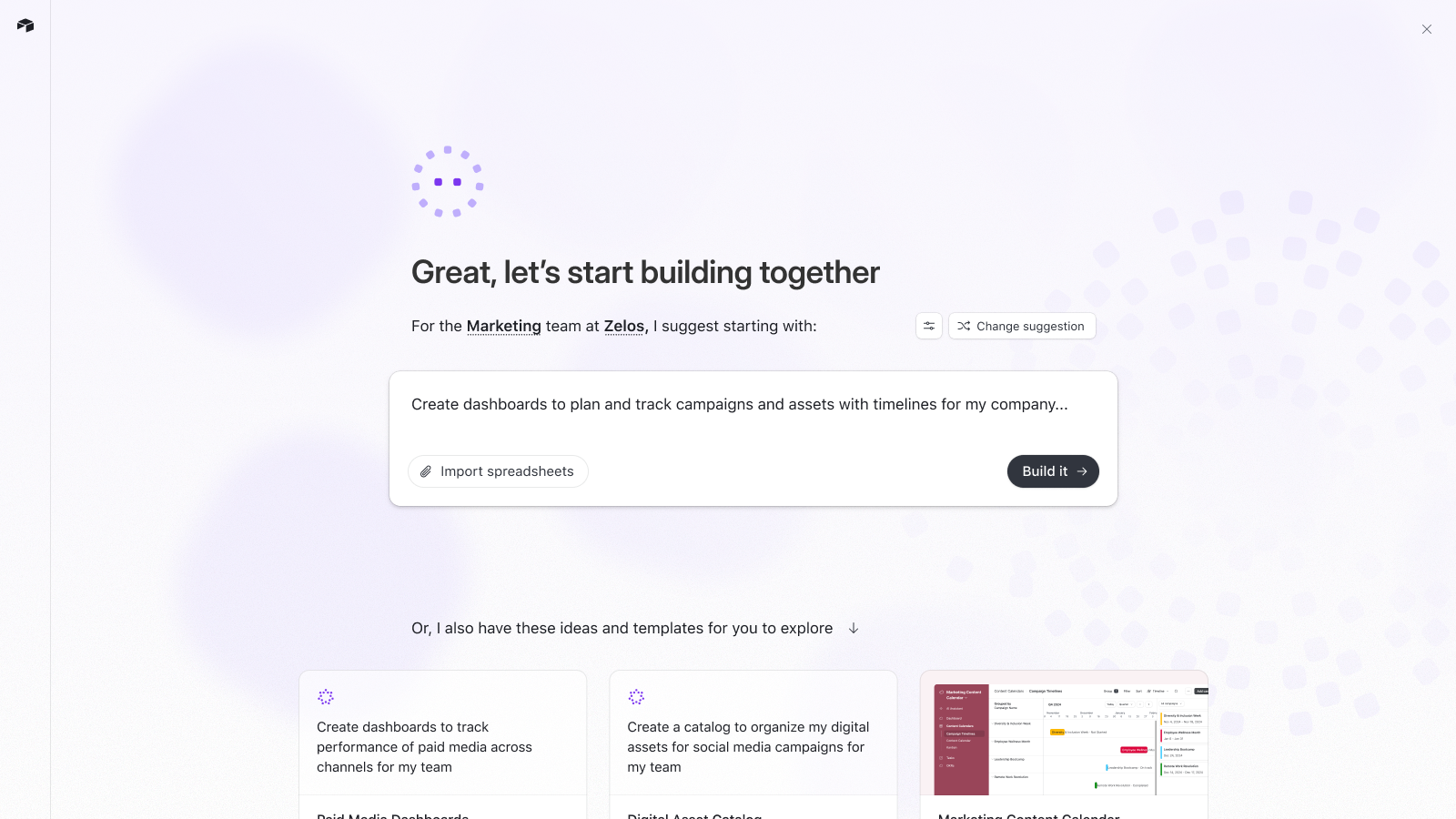
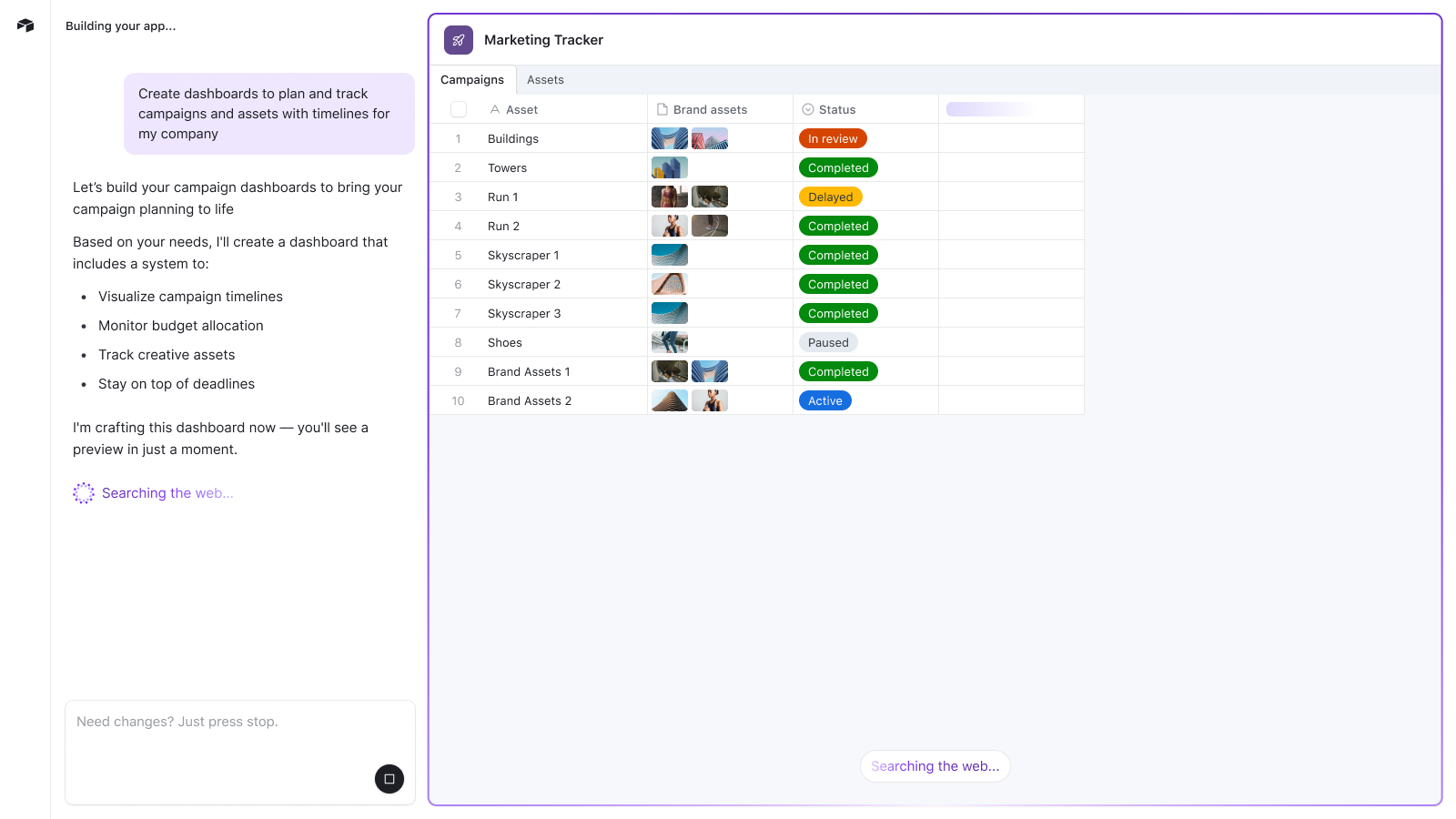
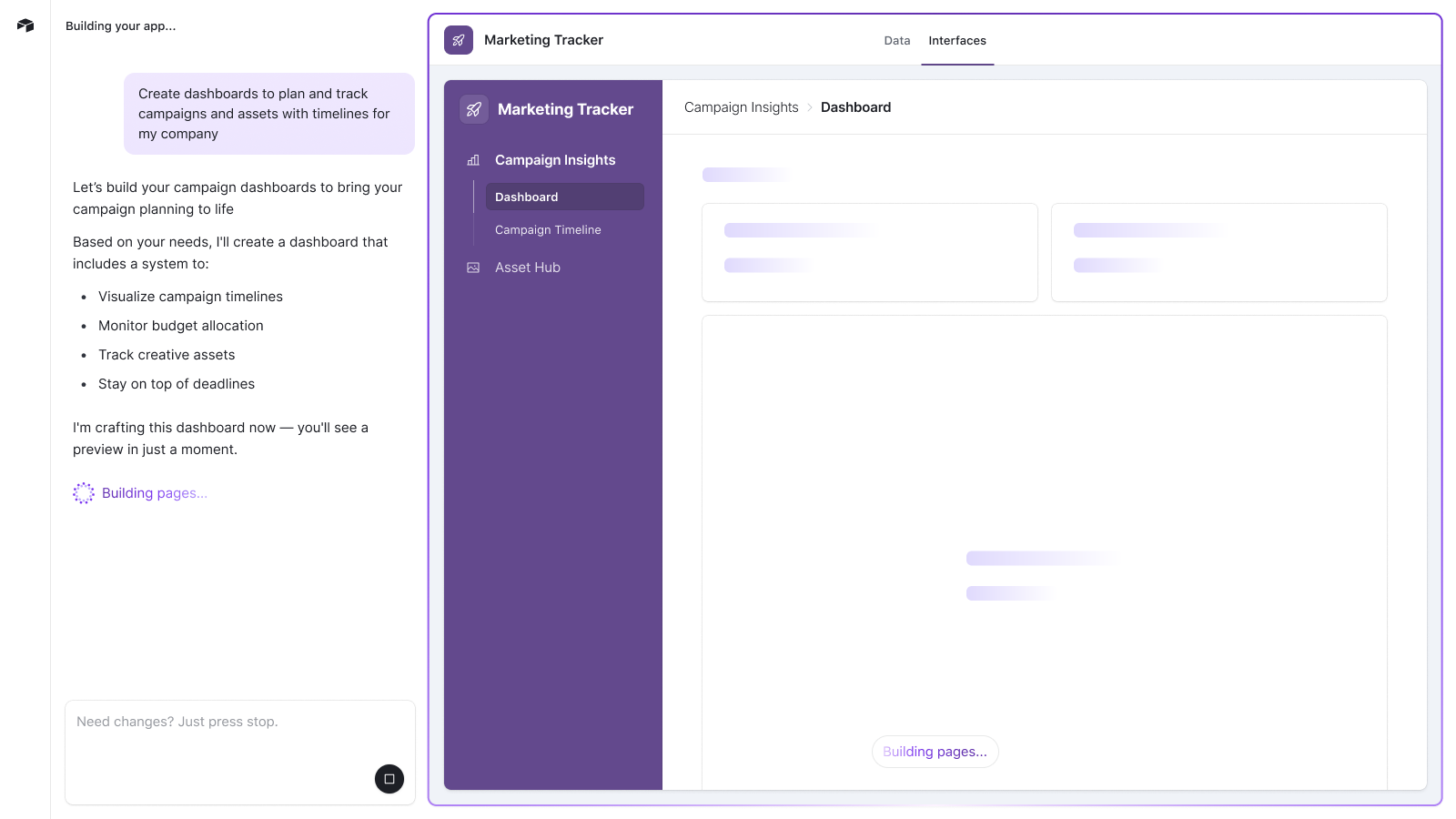
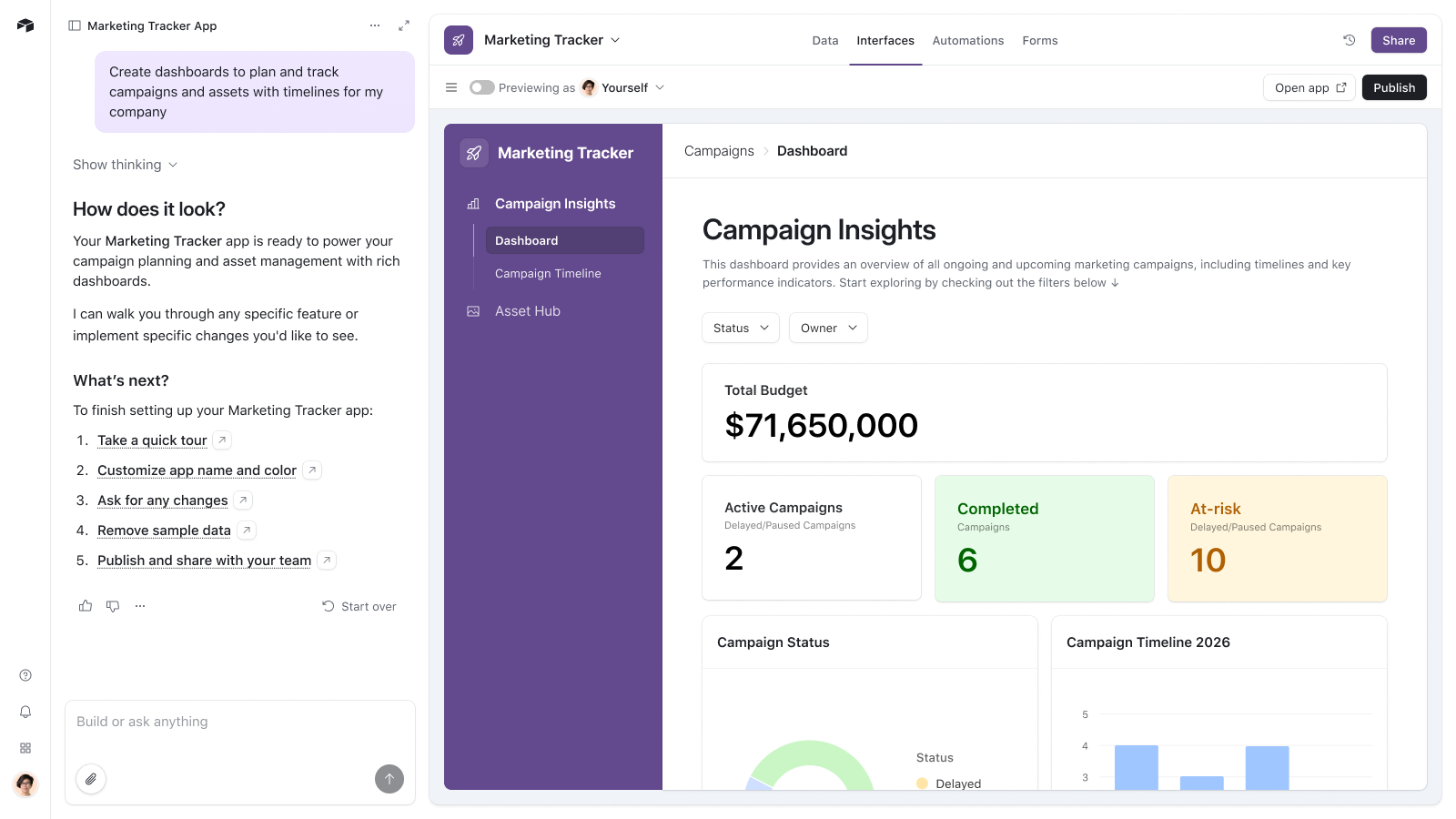
Meet Omni, your AI assistant for building in Airtable
Growth Design
Product Designer · 2024 – 2025
Growth was a new frontier for me. I learned to design through rigorous experimentation, challenge industry conventions, and measure everything. I've shipped at least 12 experiments with consistent, measurable impact across trials, invites, and sharing flows.
Share Dialog Simplification
2025Only 30% of users were completing invites in Airtable's share dialog, creating a critical conversion bottleneck. Without a PM, I led discovery, wrote the PRD, and redesigned the experience around three principles: opinionated defaults for common actions, progressive disclosure to reduce cognitive load, and inline collaborator visibility.
Across four experimental milestones over a year, the redesign increased the overall share rate by 6% (21% for trials), increased invites to new users by 14%, and improved acceptance rates by 13%. The framework is now deployed across Airtable surfaces.
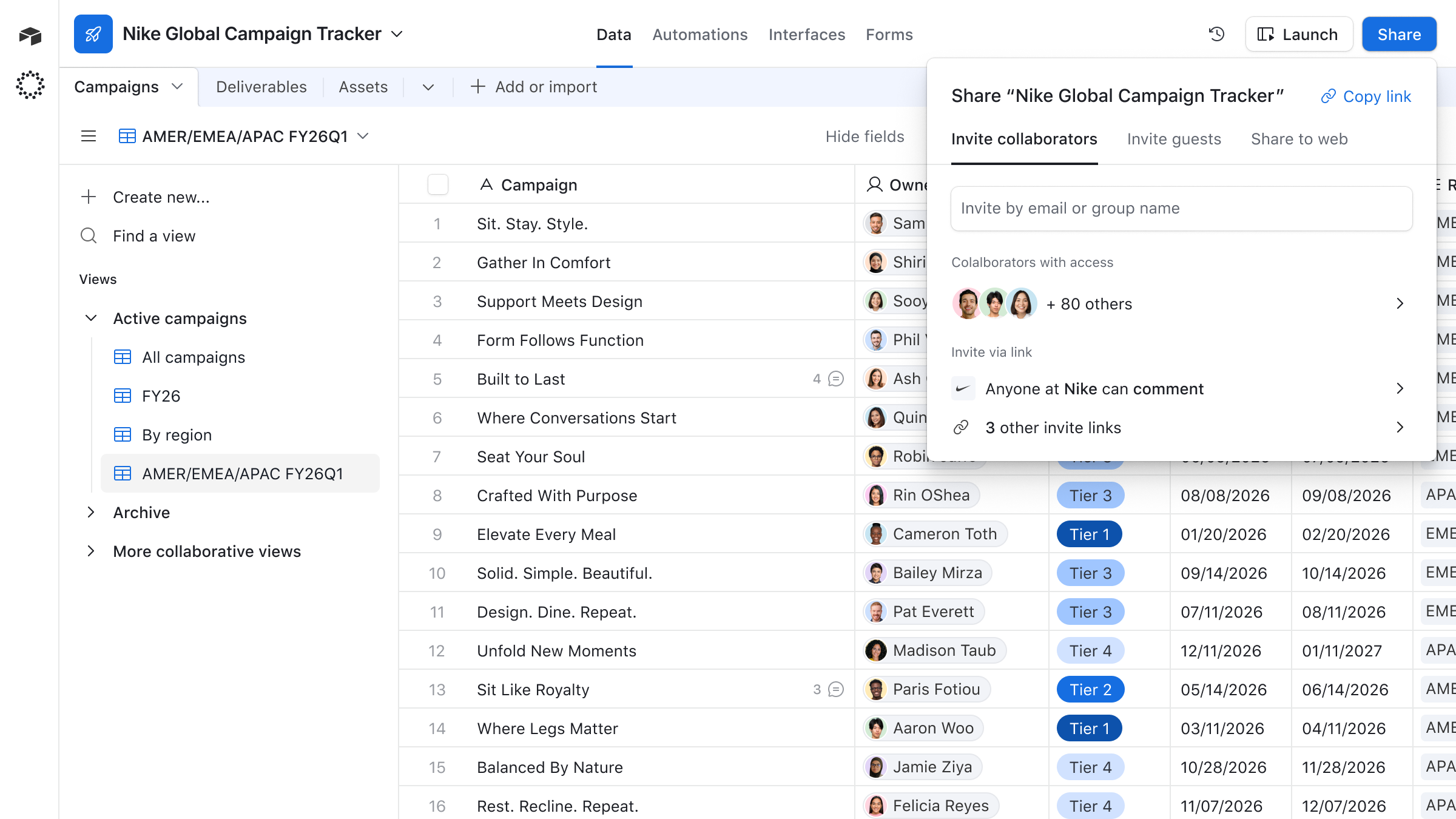
New simplified collaborator sharing experience
Trials Revamp
2024The industry convention was reverse trials, which provide full access before downgrading after a set period. Airtable's trial-to-paid rate was 20%. I challenged the assumption by designing a paid trial model requiring a credit card upfront, a controversial bet that required significant stakeholder alignment to run. The experiment delivered a 42% increase in upgrade rates with no increase in downgrades, fundamentally shifting how Airtable thinks about trial monetization.
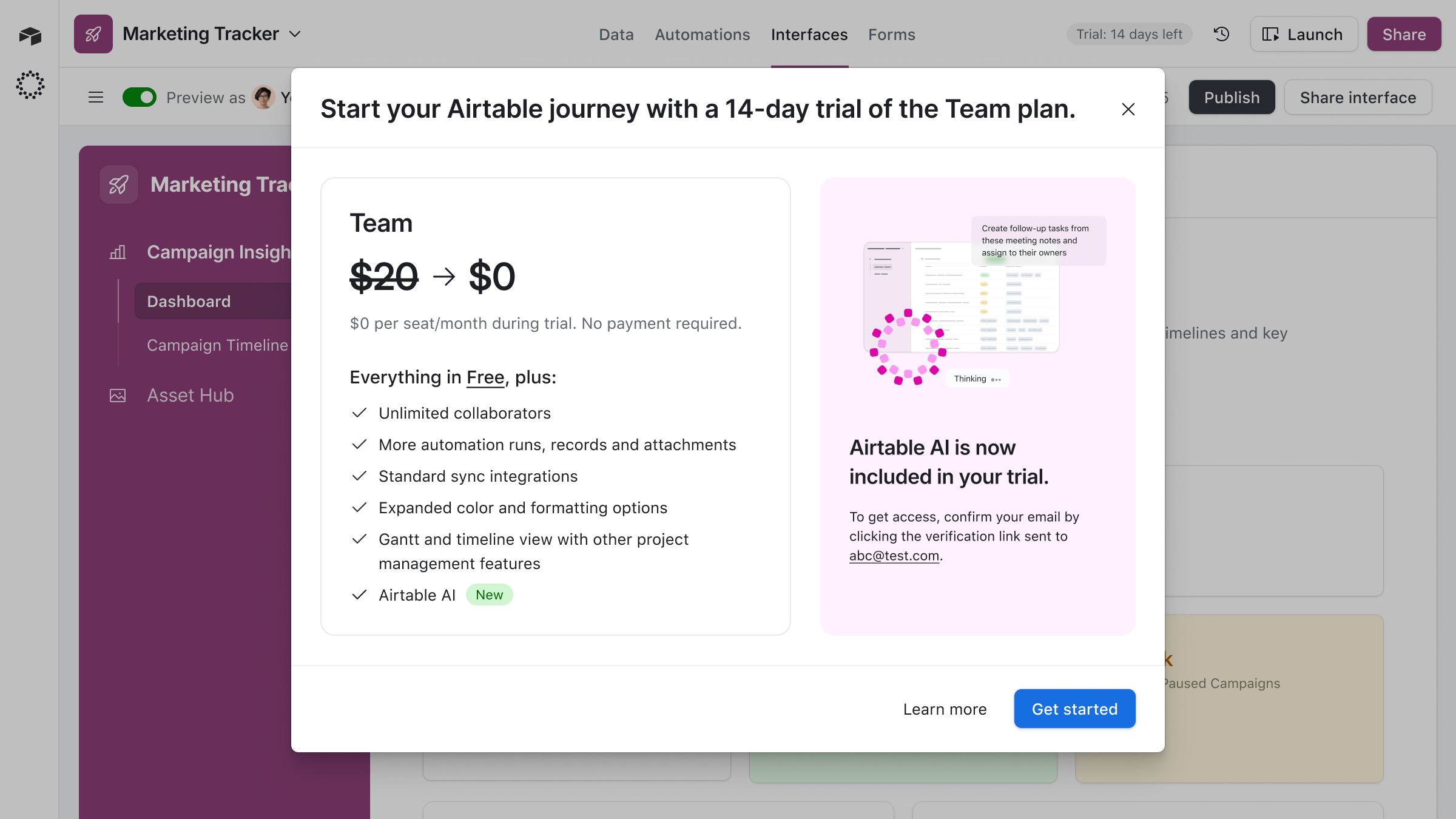
New paid trial UI explaining the trial offering
Core Product Design
Product Designer · 2022 – 2025
Before leading AI initiatives, I owned the design evolution of core product surfaces, transforming Airtable from an internal database into a platform for external-facing applications. I led the 0→1 design for Forms and Portals, two strategic initiatives that enabled users to securely collect data and share insights with stakeholders outside their organization. My role went beyond design execution: I drove discovery research with enterprise partners, managed beta programs, and led GTM design to bring both products to market.
Portals
2024Airtable customers were routing around the platform, using expensive third-party tools for external collaboration because there was no native way to bring outside stakeholders in. Through discovery research and a vision prototype that aligned stakeholders early, I defined a new guest paradigm with limited permissions tailored for external users. The core design challenge was balancing access and security in a way that felt simple rather than restrictive.
At launch, results were double the executive-aligned business targets, with $5M+ ACV, 6.3K package purchases, and 4K+ daily active users within the first year.
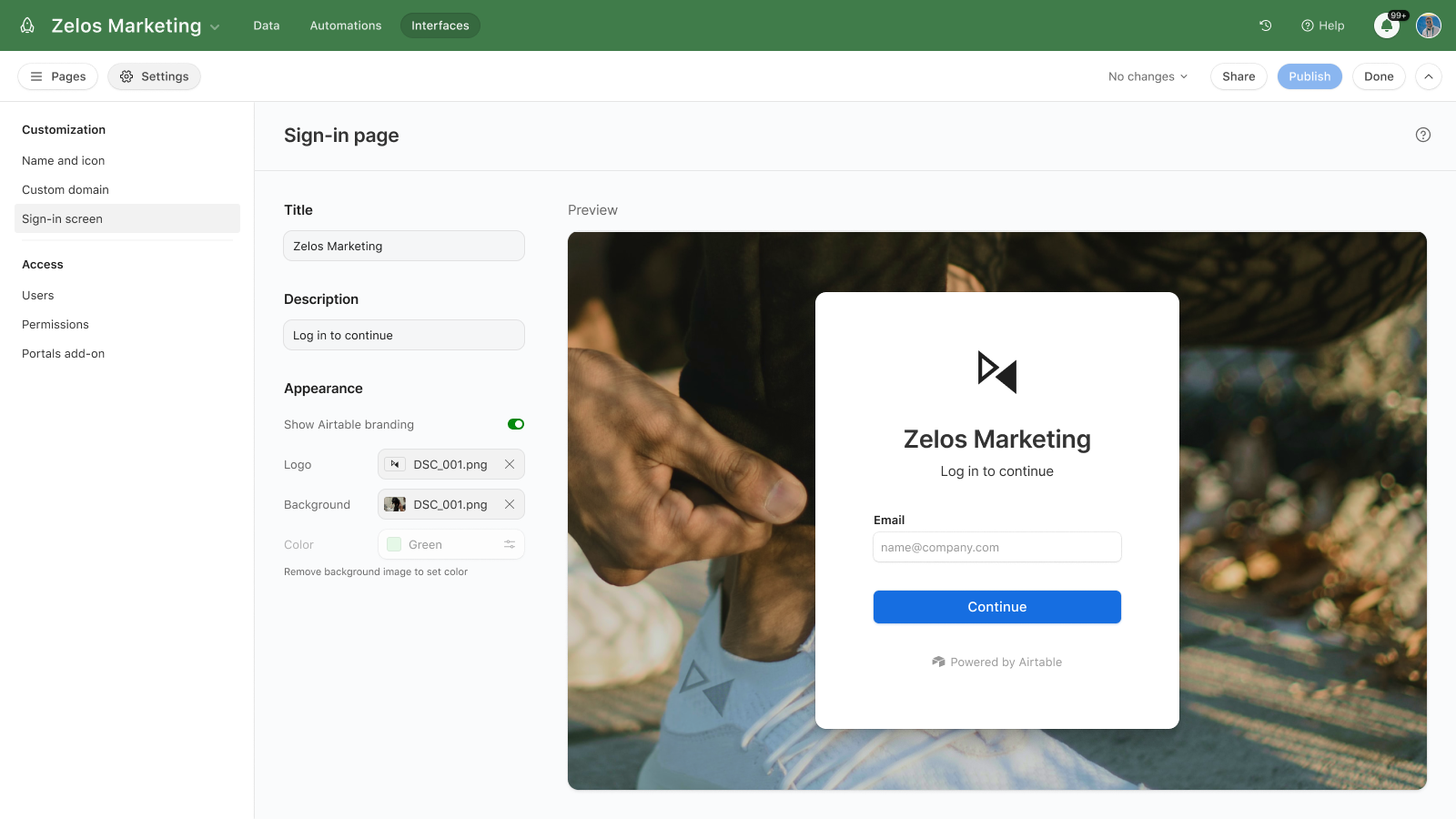
Customizable sign-in experience for external guests
Forms
2023The legacy form builder was holding Airtable back: limited layouts, no conditional logic, and a feature set that couldn't compete. I led a ground-up redesign that rebuilt the entire form creation experience with flexible layout properties, conditional logic, data validation, and more advanced features. The new builder gave customers capabilities they'd requested for years, on a foundation built to keep improving.
The new form builder achieved 10x adoption, with 180K forms created in the first two months and the highest self-serve upgrade conversion rates in Airtable's history.
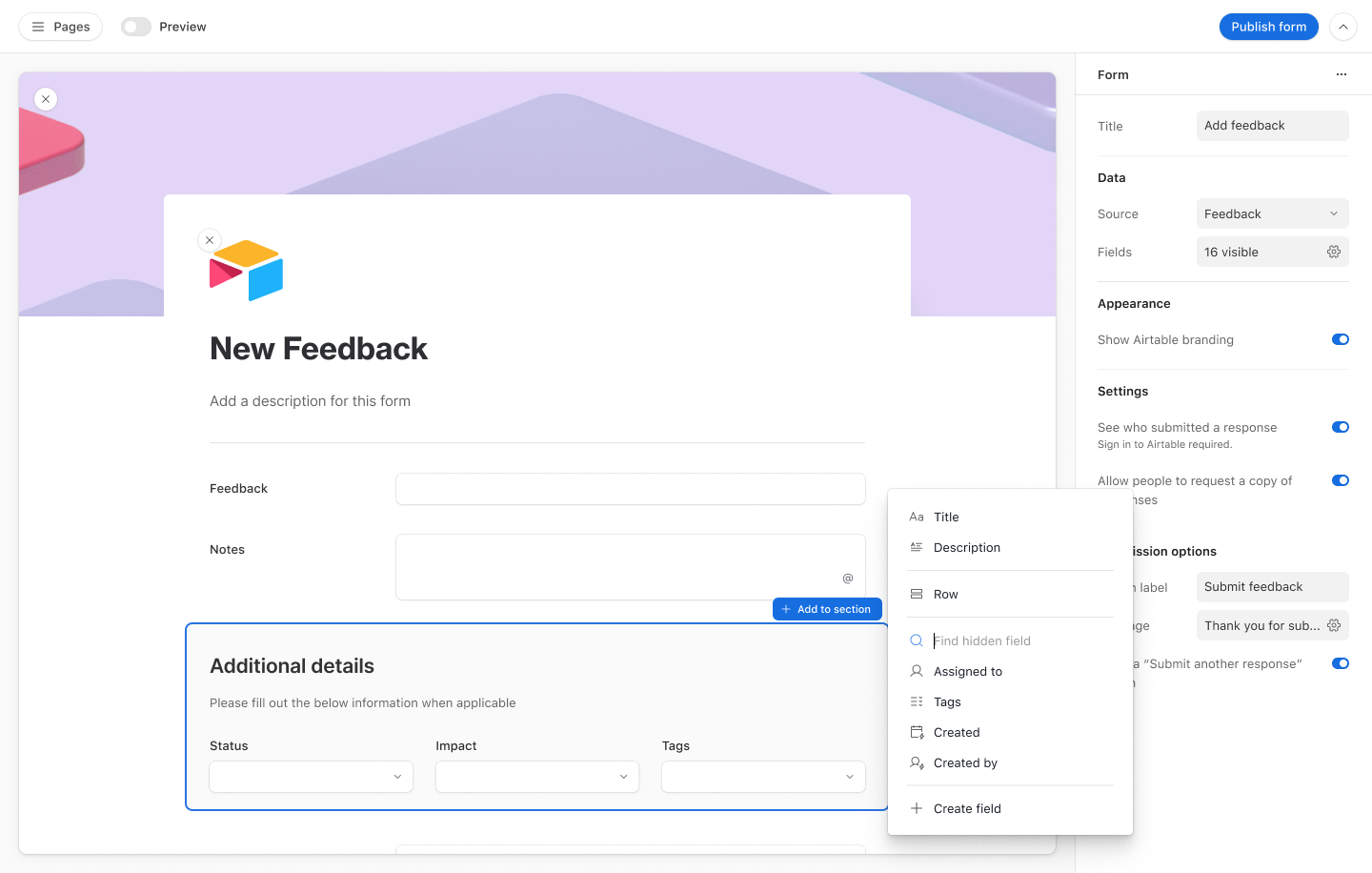
New Airtable form builder
Other Projects Shipped
Not every project gets a case study. I move toward hard problems regardless of where they sit on the roadmap.
TL;DR
Since 2022, my work at Airtable has spanned core product, growth, and AI, with each phase building on the last. I've operated beyond the traditional design role throughout: writing PRDs, running beta programs, and shipping production code alongside the design work. The through-line is outcome ownership: moving toward the hardest problems on the roadmap and seeing them through.